About Us
Yorkshire’s favourite unruly rabble
What’s a Wayzgoose
The name of the side reflects its close links with the town of Otley in West Yorkshire, where most of the side live and where our weekly practices are held. The “Wharfedale” part of the name not only refers to the beautiful Dale in which Otley lies, but also is a reference to Otley’s industrial past. In the 19th century Otley produced one of the most famous printing presses, the “Wharfedale Press”.
The other part of the side name refers to a printer’s festival, a “Wayzgoose” – a celebration which has been traced back to the seventeenth century. The annual festival was celebrated on St. Bartholomew’s eve, 24th August, when the master printer would supply a feast for his printers. In later years the feast was replaced by an outing, either to the coast or a large picnic in the countryside where good food and good ale were enjoyed in great quantity.
So put it all together and you get a side that is very proud of living and dancing in Otley. The side has had a lot of support over the years from the Town Council, local landlords – especially at the Manor House, the Bowling Green, Bay Horse and the Junction – local churches and other local groups. We have provided workshops for youth groups, supported good causes and been constant promoters of the wonders of Otley on our many trips throughout England.
Our Story
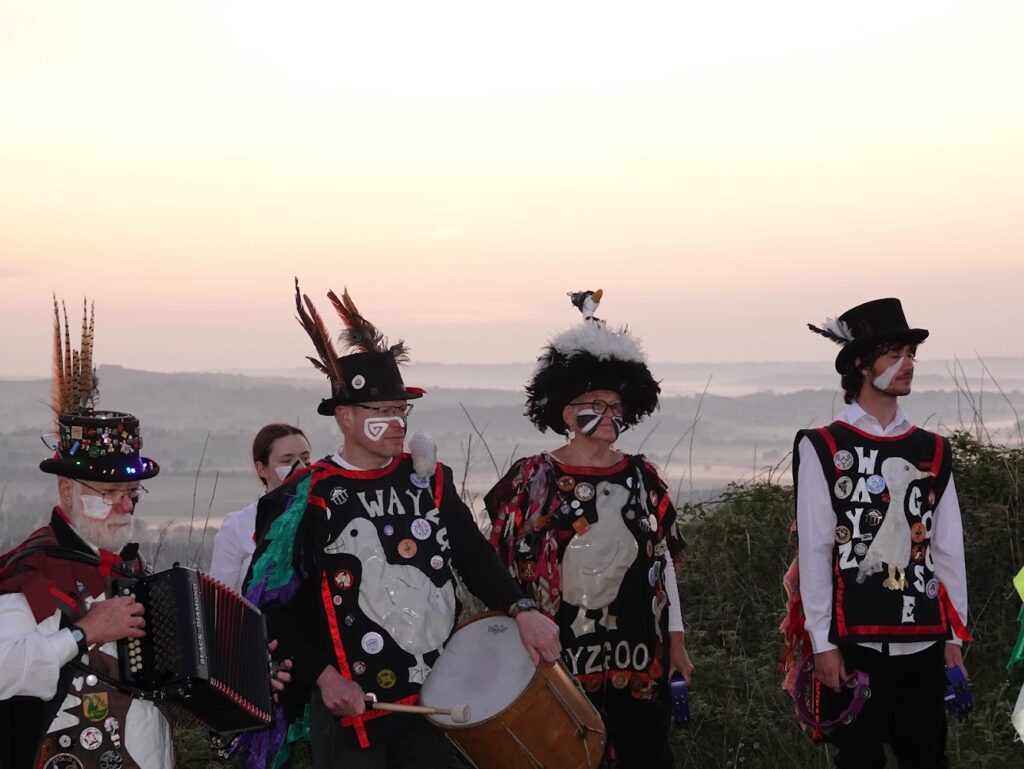
Otley’s one and only mixed Border Morris side was founded in 1993 and first burst onto the public stage on May 1st 1994. Since then the side has grown in numbers and attended many major folk festivals throughout England, dancing with sides from all over England and the USA, Australia, Romania and France.
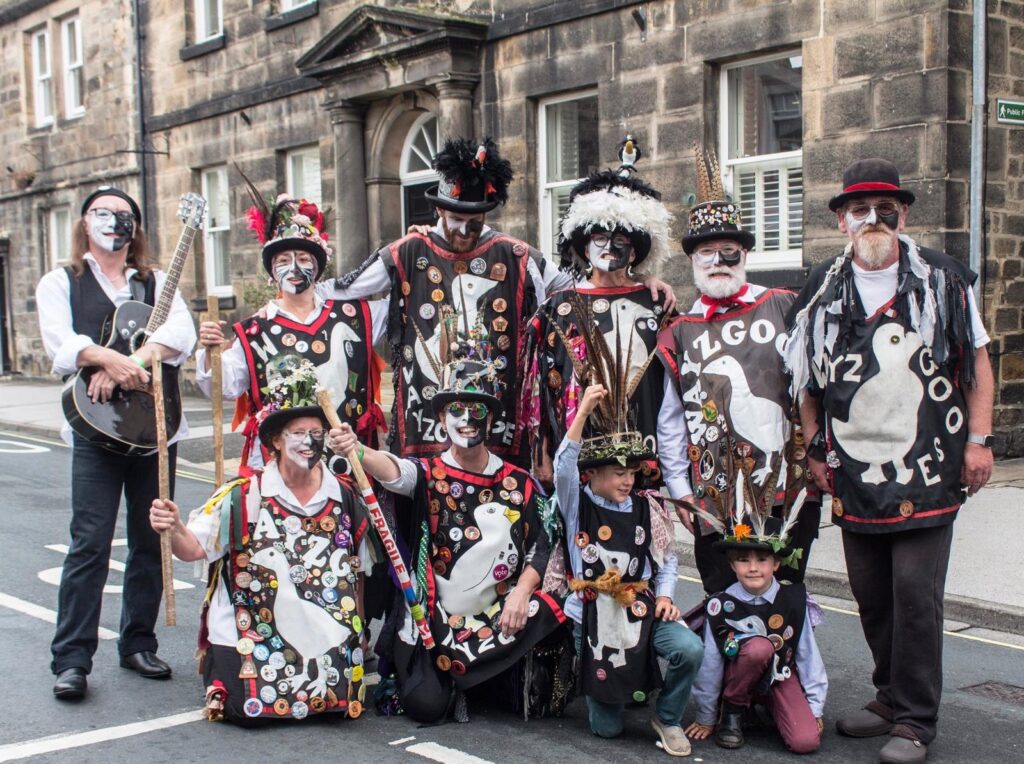
The side have travelled widely and been hailed as “true ambassadors of Morris” by Open Morris – but the committee were drunk at the time!
Originally the side was made up of a small group of seven friends who had their roots in the vibrant Otley Folk scene. The four gals – Anita, Jennie, Fran and Ann – had cut their teeth in a North West ladies Morris side from Otley, the Buttercross Belles, formed in early 1993 and still going strong. The lads, Nick, Simon and Derek, were keen to dance but with sticks in their hands rather than hankies. For Derek it was a dream come true – after founding and running the Otley Folk Festival he had assumed he was doomed to be a drummer all his life!
From dancing in a cellar, never far from a barrel of beer, the side grew and a bigger venue was needed – not to mention a bigger barrel of beer. Within a few months there were 15 in the side. As the side saw what others could do they were inspired, starting to write their own dances as well as performing versions of the few notated Border dances that survive. They quickly developed their own style – involving speed, flair and a reckless disregard for their own personal safety!
An early visit to the infamous Madcap weekend in Malvern introduced the side to a whole new network of fellow Border dancers. Friendships blossomed, ideas were exchanged and soon Wayzgoose were receiving invitations from far and wide.
Wayzgoose keeps its head – even if at times some of its members are legless – and doesn’t forget that the reason for dancing is for fun, to entertain and have a good time. As often as possible.
Who’s this Morris Bloke?
Who was “Morris”? When was “Morris”? Why was “Morris”? Questions one often hears – truth to tell, no one knows anything about this terpsichorean enigma.
The earliest historical records of Morris dancers come from the English royal court of the sixteenth century. There are lots of dotty theories about its origins and some not so dotty. Explanations for all this leaping about include forgotten pagan fertility rites, ancient druid-type rituals, an import from the Moors in Spain, or simply a quick way to earn a few bob and buy a pint when there was little work about. Basically and honestly – no one has the faintest idea when and where it all started. And as for why?
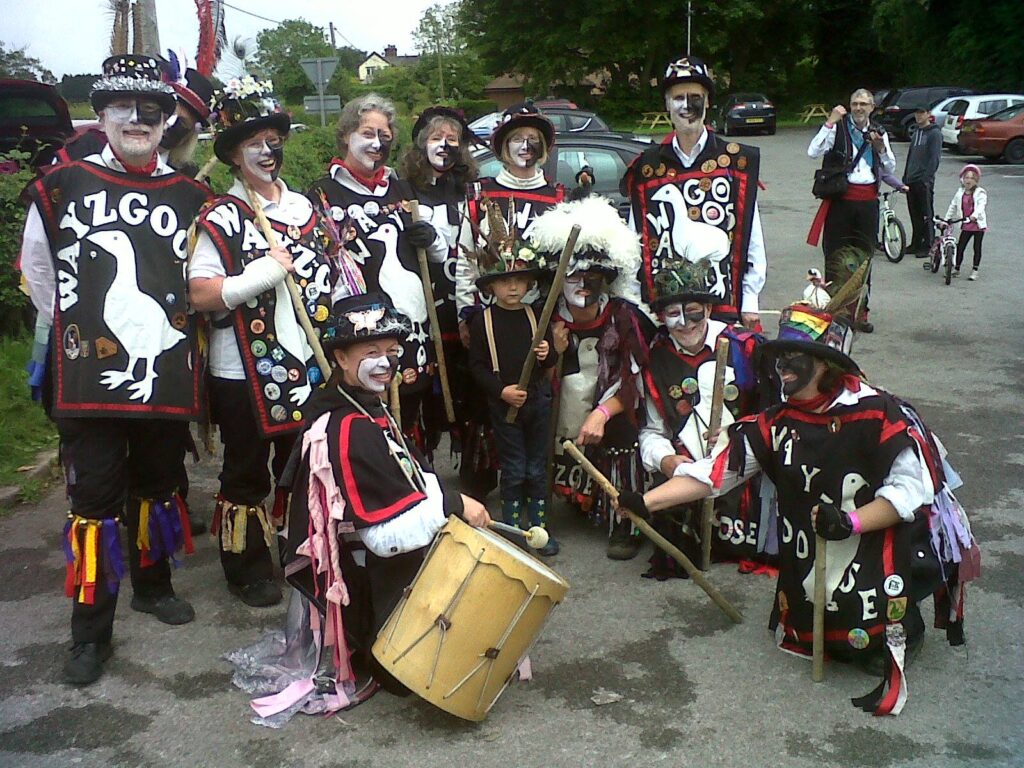
Most people when asked to describe Morris dancers think of beer-bellied, bearded chaps dressed in white, wearing flowery straw hats and waving hankies about. This Cotswold image has largely dominated public perceptions and sidelined other regional types of Morris dance. But there’s more to Morris than Cotswold.
The folk revival of the 1970s led to a reaction to this stereotype – especially from the ladies who wanted to shave off their beards! Border Morris was largely a product of this revival. The dances theoretically originated from the Herefordshire, Worcestershire and Shropshire border regions and have undergone a total transformation since. The variation in styles of Border Morris is remarkable – it has been known for two or three Border sides to dance together and look completely different, or all dance the same dance with the conviction that only they dance the proper version!
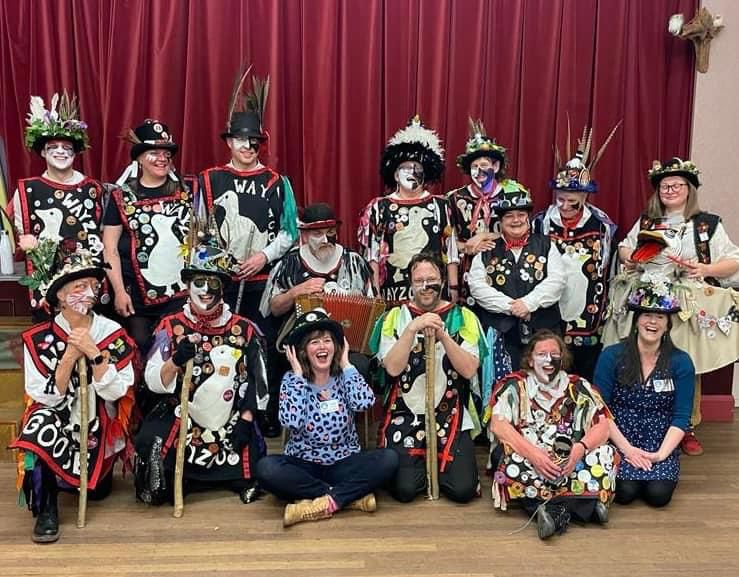
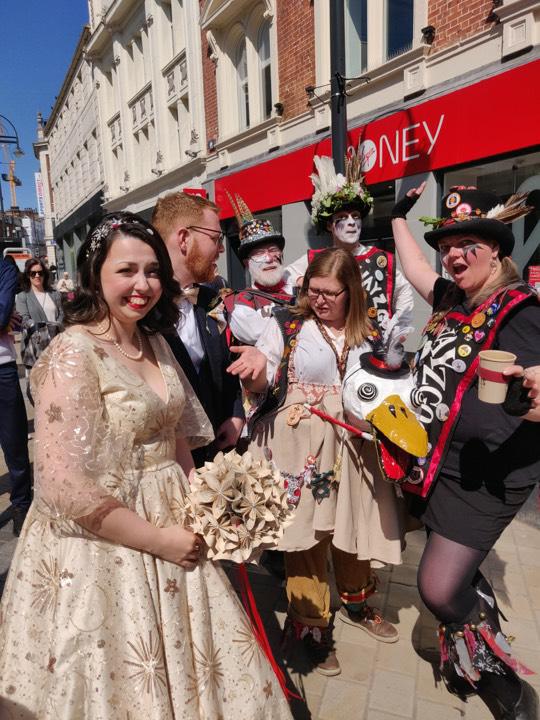
Border sides can appear almost courtly – sedate with precise patterns and so laid back as to be horizontal. Other Border sides appear manic, racing about in a whirl of rags and a flash of sticks. There is an immense range of Border Morris styles, as diverse as the kits – but one thing it should never be is boring.
Meanwhile, back in deepest Otley, Wayzgoose has evolved its own peculiar style of Border Morris with origins in many different traditions and inspirations. The side is constantly evolving in a living tradition of dance – forward thinking, occasionally vertically challenged, and always entertaining.